

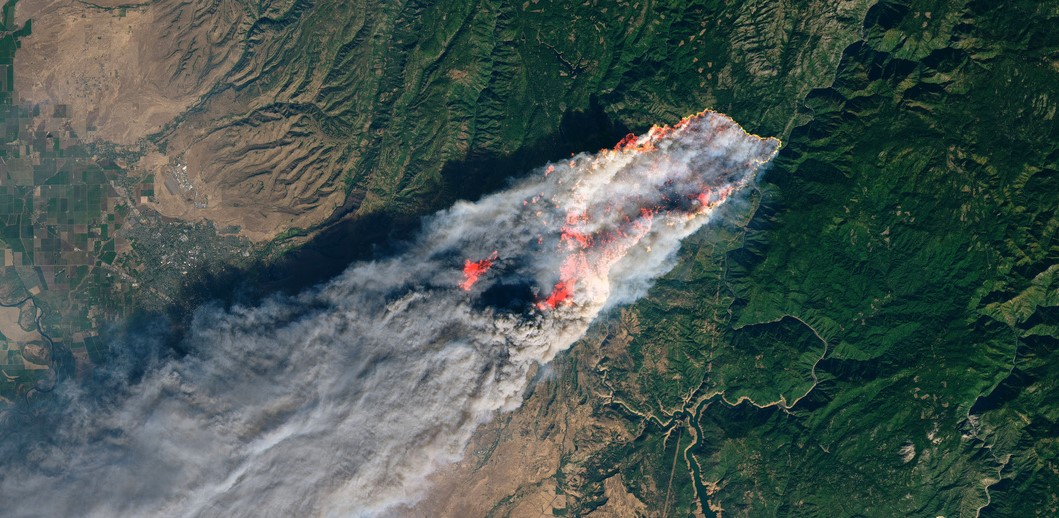
The mounting threat of wildfires in the U.S. demands urgent action, and seven leading nonprofit research organizations have joined forces to identify key intelligence gaps that need to be addressed.
Nearly 50 million homes in the country are at risk, with annual economic damages in the hundreds of billions, according to a 2023 government report. The average yearly acres burned have more than doubled over the last 30 years, with no sign of abating.
To combat this threat, it’s not enough to simply hire more firefighters. Accurate intelligence on this quickly evolving and widespread threat is sorely needed, and this can be provided through means we already have access to. The Wildfire Working Group (WWG) issued its study in May of 2025 explaining how this might be accomplished.
“No miracle technologies are needed—existing and emerging solutions can dramatically improve our national wildfire response,” as the WWG put it. “With coordinated action, the U.S. can make significant strides in protecting lives, property, and ecosystems.”
The study spotlights seven critical areas where focused investments can deliver outsized benefits:
Last Mile Communications: Frontline responders are often cut off from reliable voice, data, and video links in remote fire zones, hampering coordination and safety. Commercial satellite communications and next-generation handhelds can close this gap, ensuring incident command and crews stay connected where it matters most.
Common Operating Picture: Non-standardized data and systems across federal, state, tribal, and local agencies limit shared situational awareness. Advancing interoperable platforms like the Team Awareness Kit (TAK), with wildfire-specific data integration and civil sector collaboration, will enable unified, real-time decision-making.
Rapid Detection: Every minute matters, and those minutes are lost if new ignitions go unnoticed. AI-powered wildfire detectors installed throughout high-risk communities can deliver near-instant detection and alerts, helping responders act before small fires become disasters.
Unmounted Firefighter Tracking: Lack of real-time location tracking for firefighters on foot puts safety and operational efficiency at risk. Equipping crews with proven tracking devices and TAK-enabled handsets will provide continuous, interoperable personnel tracking for better oversight and rapid response.
Persistent Surveillance: Most wildfire-prone regions lack sufficient monitoring assets, limiting real-time intelligence for strategic and tactical decisions. If fully deployed as planned, emerging commercial satellite constellations and persistent surveillance technologies could deliver 10–20-minute revisit rates over the U.S., transforming situational awareness and fire management.
Fuels Intelligence: Outdated and sparse fuels (i.e. dry vegetation) data hinder accurate fire modeling and wildfire preparedness. Development of advanced algorithms, utilization of hyperspectral imagery, and unified fuels intelligence processing will produce timely, high-resolution data to support smarter mitigation and response.
Weather Intelligence: Under-equipped weather monitoring and fragmented fire-weather modeling degrade forecasts and operational planning. Expanding sensor networks, deploying boundary layer drones, and scaling up modeling capacity will provide actionable, timely weather insights.
The WWG further recommends the establishment of a National Wildfire Intelligence Center, featuring regional or state-level hubs as a force multiplier to rapidly prototype and deploy new solutions, ensure national access across the U.S. to authoritative wildfire data, and deliver timely, fused intelligence products using a state-of-the-art, scalable infrastructure.
As the White House Office of Science and Technology Policy considers new approaches to strengthen wildfire preparedness and response through its 2025 Request for Information to increase wildfire fire-fighting capabilities, the WWG stands ready to support the creation of a national technology roadmap to keep American communities safer and more resilient. Read the Wildfire Working Group summary white paper here.
The WWG consists of: The Aerospace Corporation, MIT Lincoln Laboratory, The Charles Stark Draper Laboratory, Johns Hopkins Applied Physics Laboratory, NASA Jet Propulsion Laboratory, The MITRE Corporation, and the NSF National Center for Atmospheric Research.