

ASCEND 2026 has wrapped, and with it Aerospace's Space Transformation Track (STT), a full day of on- and off-stage content tackling some of the most vital and fast-moving issues in the industry. Here are the panels and discussions led by our team at this lively and technical Washington, D.C. event.
Before the track got started, Aerospace experts had already led half a dozen talks and panels over the previous two days. They addressed orbital datacenters, opportunities in very low Earth orbit, the nascent cislunar digital economy, safe nuclear power in space, and space domain awareness — not to mention some technical talks and paper presentations.
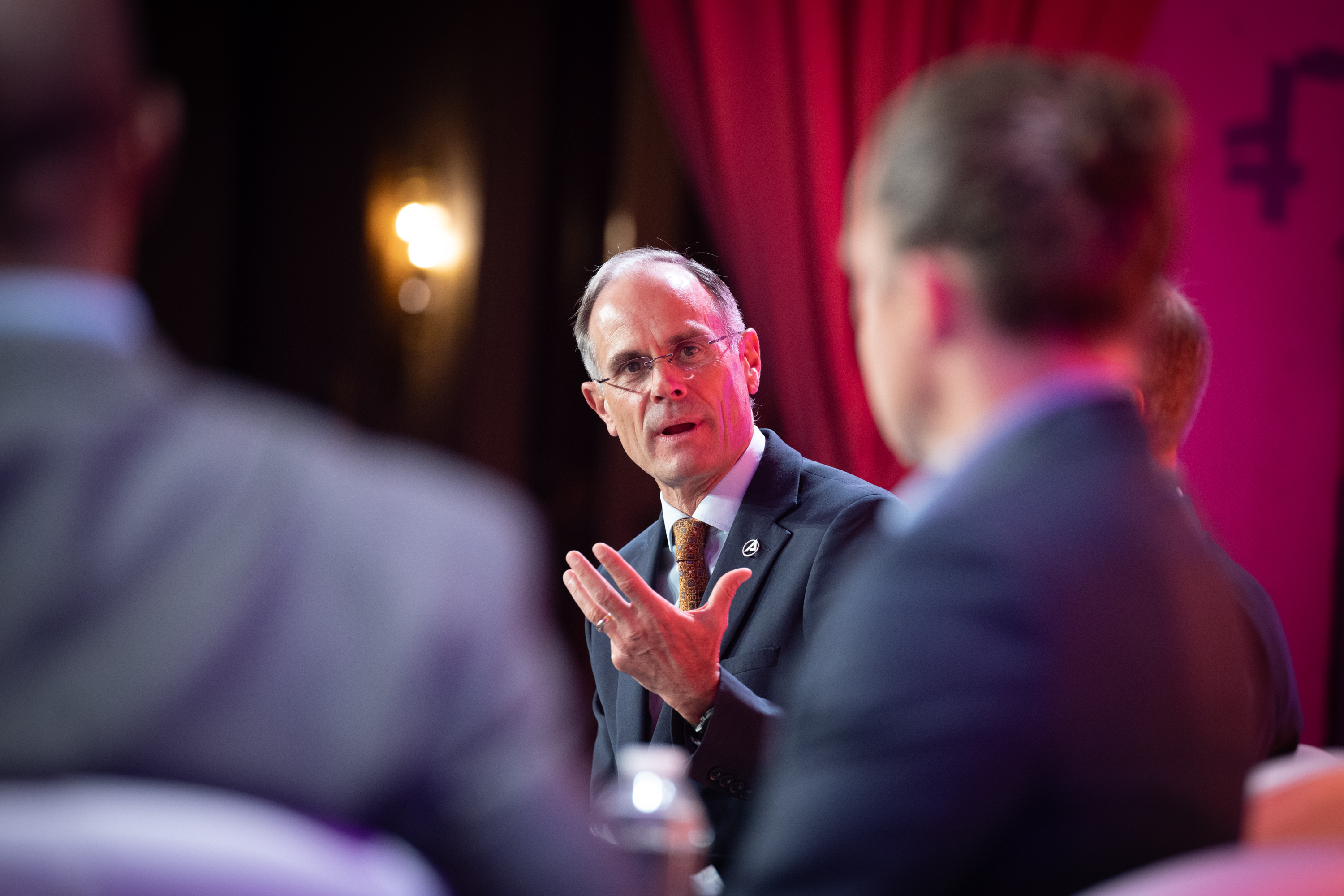
Thursday kicked off with a panel led by Aerospace's Kevin Bell, SVP of the Engineering and Technology Group, discussing the draw of "hybrid architectures," which bridge government and commercial, private and public, and developing and mature ecosystems. Things like shared incentives, interoperability, and forward-looking frameworks for AI and launch are crucial to maintain leadership in numerous space-related sectors.
"What we've seen so far in the marketplace is a lot of creativity and innovation, and because they're responding to market forces, they're still finding a way to address our problems but in very different ways," said Dr. Gillian Bussey, Deputy Chief Science Officer at the U.S. Space Force. "There's a different approach to standards depending on what kind of capability and what kind of technology you're talking about; the important thing is to keep in mind what are the capabilities that you're driving towards at the end."
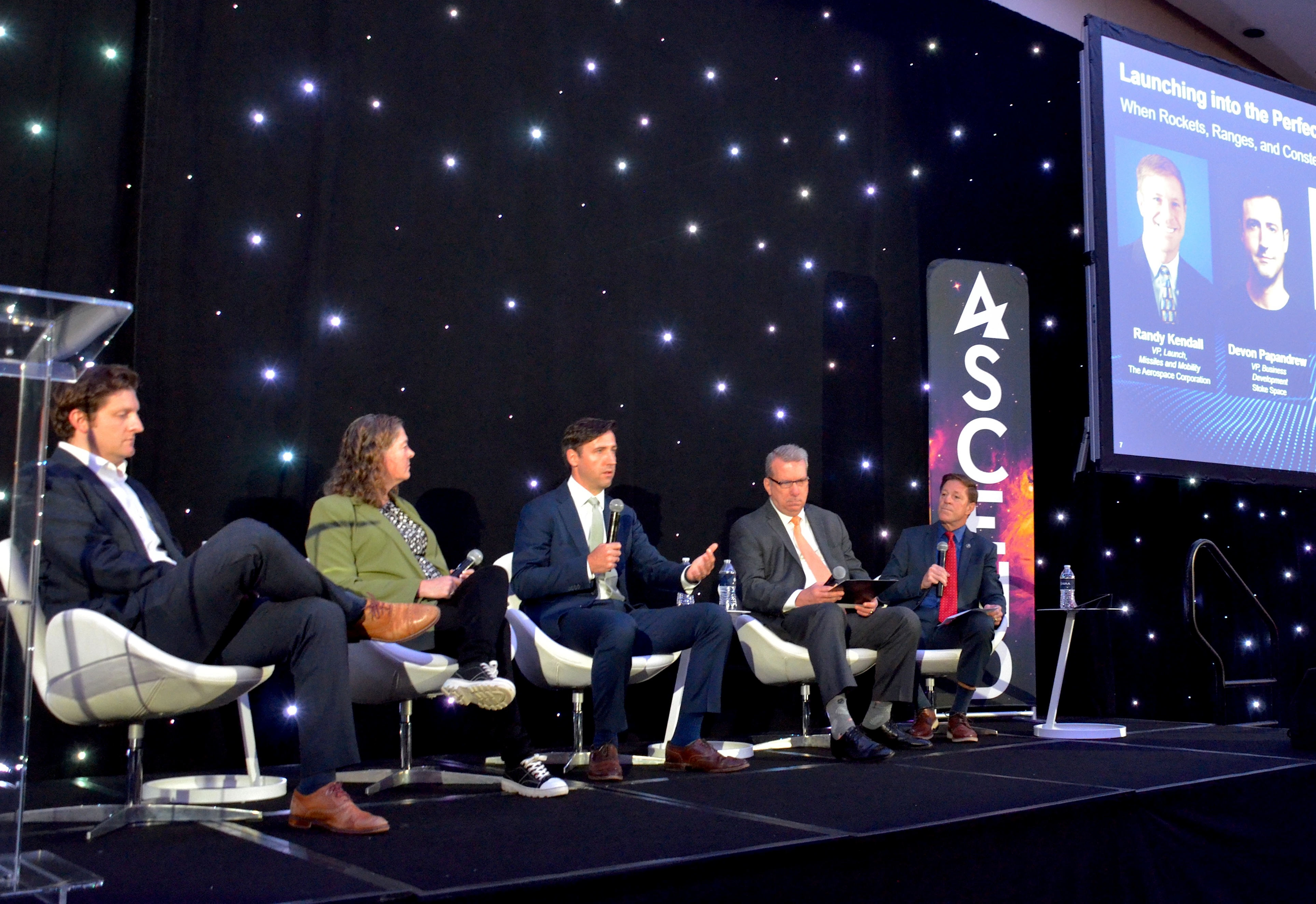
The next panel took on the business of launch, which despite tremendous expansion over the last two decades is still in many ways a major limiting factor in the space economy. But the panel, moderated by Randy Kendall, Aerospace's VP of Launch, Missiles and Mobility, clearly expressed that it isn't just about making more rockets. Instead, it's infrastructure and workforce that must be invested in, as well as fundamental advances to improve responsiveness and cadence.
"I think [Kendall] framed it well: invisible innovation," said Stoke Space's VP of Business Development, Devon Papandrew. "Rockets on the ground don't make money. They don't address customer need. They don't address warfighter need. I think we will all win or lose on how we innovate in a way that reduces the time between flights — that's really what the company was founded on. How do you be disruptive and think about shortening the timelines in between flights? Because that's what overwhelmingly the market, both commercial and defense, is asking for."
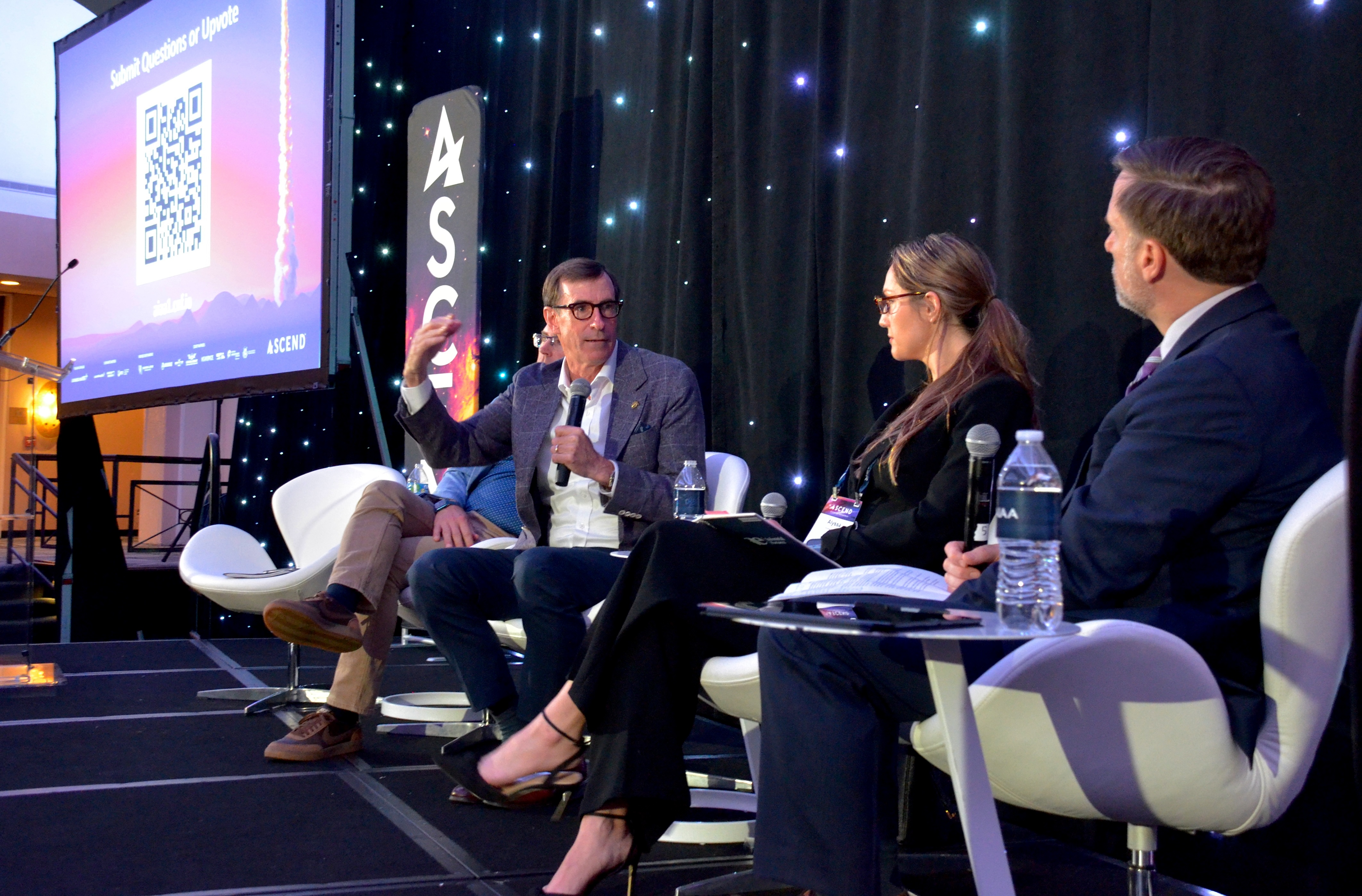
In the spicy next panel led by Aerospace VP of Defense Strategic Space Jamie Morin, CSF president Dave Cavossa raised eyebrows by suggesting that if we want to keep up, "we need to be more like China." That is, he quickly clarified, when a monumental task is undertaken, there is merit to centralized planning and resource allocation for that task, as China's success in its space ambitions has shown. At the very least, the panel agreed, we need broad and deep investment not just in physical infrastructure, but intellectual and commercial underpinnings of that infrastructure.
“Industry's good at doing investing in the things they think they can get a return on invested capital in the five to ten year horizon,” said AIAA President Clay Mowry. But in terms of mobility in space and the space environment, we need sustained development in some of the core technologies that are going to get us there. Those are more ten, even twenty-year time horizons. Developing fundamental technology is where we need to push.”
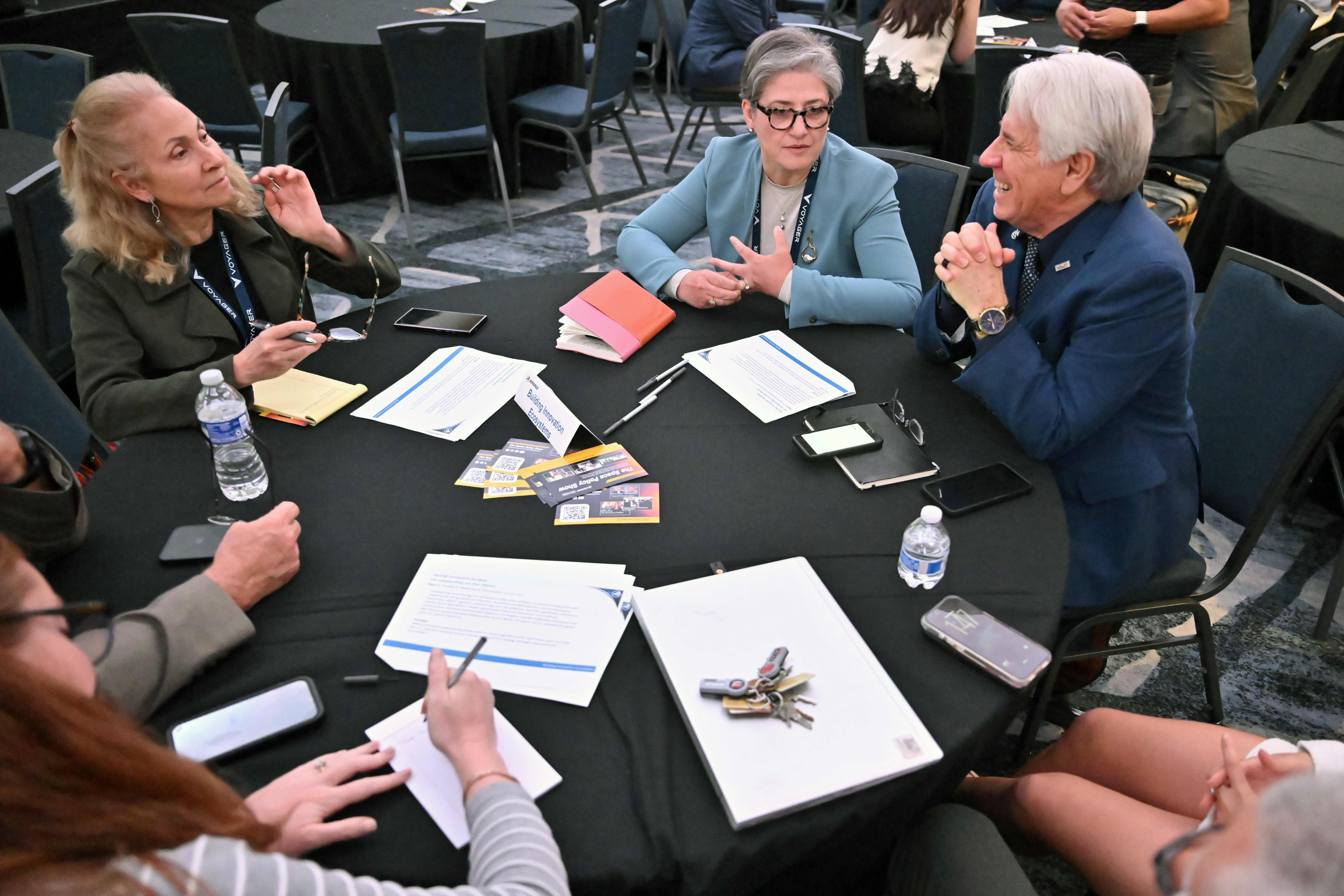
The afternoon brought an interactive “Innovation Sandbox” session, led by Aerospace experts, in which attendees took on problem areas, brainstormed solutions and obstacles, and presented their process and conclusions live to the room. Interestingly, multiple groups independently chose to focus on how some of the groundwork they proposed could be started not next year, not next month, but... "Monday."
Their ideas and criticisms were folded into a panel at the end of the day led by Aerospace's Kara Cunzeman, where leaders from Vast, Varda, Redwire, and investor group GXO Inc. discussed changing approaches to innovation by commercial space.
In a panel with two human exploration experts from NASA, Aerospace’s MC Chester delved into the future of science missions as they are increasingly launched and empowered by commercial partners. Increasing mission cadence and variety while learning to co-exist with those partners has been a challenging but valuable endeavor, they emphasized.
"We need to remind ourselves that the premier scientific and engineering government organization is not necessarily where you go to for commercialization ideas and how to run a company,” said George Nelson, Chief of Staff in NASA’s Strategy and Architecture Office.
Visit Kickstage next week for more details on the conference and panels — the Space Transformation Track was just one part of Aerospace’s presence at ASCEND 2026. Check out the rest of our team’s panels, presentations, and papers here, and feel free to reach out for more details on any of the content!