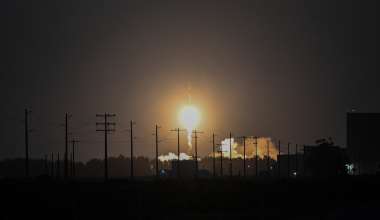
The number of space launches originating from the United States – by far the global leader – has increased exponentially in recent years as launch costs have gone down, commercial launch systems have matured, and reusable rockets have proven reliable. In 2025 the U.S. conducted nearly 200 total orbital launches – a 9-fold increase from 10 years prior – and multiple launch forecasts project this number to more than double by 2030.
Reliable, affordable launch capabilities make space more accessible for a diverse ecosystem of space operators: government agencies conducting critical national missions, commercial innovators building economies and testing experimental payloads in space, academic groups and allied nations boosting sovereign space capabilities, thereby strengthening U.S. security. To maximize this national asset, a White House Executive Order from August 2025 explicitly states the goal of “enabling a competitive launch marketplace and substantially increasing commercial space launch cadence and novel space activities by 2030.”
With increased demand for access to space comes added strain on supporting launch infrastructure. There is widespread recognition of the need to modernize America’s existing spaceports. The Aerospace Corporation, drawing on heritage that dates back to supporting the nation’s ranges during the earliest launch programs, is applying that expertise to help America build the spaceports of the future.
Spaceports Modernization Efforts Underway
The U.S. has historically relied primarily on two locations for space launches: Cape Canaveral Space Force Station in Florida and Vandenberg Space Force Base in California, which house the Eastern Range and Western Range, respectively. Thanks largely to the dominant rise of commercial launch activities, both ranges set new records for activity in 2025. As the Space Force notes in a 2025 annex to its Commercial Space Strategy, “demand for launch complexes at Cape Canaveral Space Force Station and Vandenberg Space Force Base could exceed availability.”
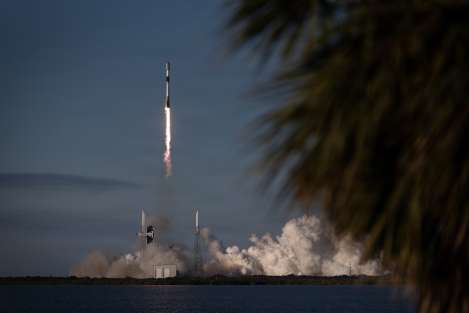
In response to projected continued growth in launch demand, the U.S. space enterprise has been preparing to modernize this critical space infrastructure. In 2020 Aerospace authored a white paper, A National Spaceport Strategy, for Air Force Space Command, which recommended the formation of a national spaceport interagency working group (NSIWG). In 2022, this NSWIG was established, chaired by the FAA’s Office of Commercial Space Transportation and featuring members from NASA and the Departments of Commerce, War, State, and Transportation. Aerospace supported the NSIWG’s charter to develop and draft a national spaceport strategy.
Today, Aerospace supports the U.S. Space Force Office of the Chief of Space Operations’ Spaceport of the Future initiative, which secured $1.3 billion in investment for spaceport infrastructure recapitalization at Cape Canaveral Space Force Station and Vandenberg Space Force Base from 2023 through 2028.
“Commercial launches account for more than 90 percent of all launches, and the launch providers need these spaceports to support, respond and react at the speed of commercial business,” said Rich Lamb, Aerospace’s systems director leading support for Spaceport of the Future.
Pads, Payloads, Propellants and More
Spaceport modernization extends beyond launch pads. Lamb noted the critical importance of the supporting infrastructure that includes dedicated facilities for launch integration and payload processing, as well as propellant storage and delivery systems and instrumentation such as telemetry, radars and meteorological assets.
Aerospace’s systems engineering and integration experience available to range operators and spaceport developers cover the breadth of technical disciplines needed across the entire facilities lifecycle for spaceport instrumentation architectures, ground systems facilities, and related launch and satellite infrastructure and systems. Expertise in these disciplines allows Aerospace to support the U.S. government at the Eastern and Western Ranges as well as the growing assortment of U.S. states, regional authorities and private-sector groups aiming to break new ground on spaceports innovation in nontraditional places.
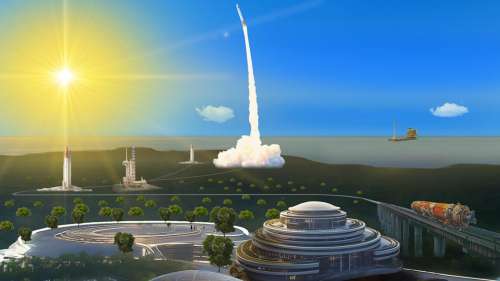
Spaceports must also meet federal regulatory thresholds for public safety and other requirements to receive launch licenses. Aerospace runs simulations to help assess likely risks to the public using its proprietary Trajectory Optimization Program and related tools. These simulations make key assumptions based on planned uses for a candidate spaceport project, such as the likely proven status of a launch vehicle and the experience level of its operator, potential characteristics of desired launch and recovery capabilities (such as planned launch vehicle classes) and a likely area where inert debris could cause risk to the public, among others.
“Aerospace’s tools combine launch vehicle modeling, failure modes and responses, ground impact probability and population data to give a quantitative measure of public risk for any prospective mission from any location. These results are very useful in addressing the unique challenges associated with orbital launch from an inland site,” according to Rolf Bohman, Aerospace senior engineering specialist who leads feasibility studies.
Though Aerospace’s assessments do not guarantee any licensing outcomes, they generate valuable insights. “Some stakeholders who want to develop a spaceport are relative newcomers to space development and the systems involved in infrastructure, but they want to learn and participate in the endeavor,” said Glenn Law, systems director leading Aerospace’s commercial launch projects group. “It’s an interesting experience to help guide new stakeholders as they explore where they want to go, what orbits are relevant, and where they want to site their launchpads.”
Inland Spaceports May Offer a Potential New Launch Approach
Today’s rockets are typically launched vertically near large, open bodies of water for optimal orbital insertions and to reduce risks to the public from potential mishaps or aborted launches. However, there are multiple licensed horizontal launch sites in the nation’s interior, and U.S. stakeholders in the private sector and at all levels of the public sector are galvanizing interest and support for spaceport development in their communities.
Aerospace recently conducted a feasibility study for the Oklahoma Space Industry Development Authority (OSIDA), which operates the Oklahoma Air and Space Port in Western Oklahoma. This continues a partnership with Aerospace beginning more than 20 years ago, when Law led significant technical assessments and documentation for OSIDA before it eventually acquired the first inland, landlocked spaceport license in the U.S. in 2006. Today, OSIDA is gearing up for launches beginning in 2027 that will support microgravity research and suborbital spaceflight operations.
Utah is another inland state considering options to develop and operate a new spaceport. The Utah Department of Transportation (UDOT) recently tapped Aerospace for a public safety risk feasibility study that followed similar physics-based methodologies to those outlined in federal regulations.
“This is just a first step in evaluating whether spaceports are realistic in Utah, so it’s too early to tell whether we would ultimately implement spaceports in our state,” UDOT spokesperson John Gleason said. “However, based on the positive results of the recent safety feasibility study, we are living up to our reputation of pioneering innovations and moving forward with the next steps of an economic evaluation.”
RS&H, a major national architecture, engineering and consulting firm, has also contracted Aerospace to conduct launch trajectory risk assessments as part of a broader inland orbital spaceport feasibility study on behalf of the Concho Valley Council of Governments (CVCOG). Supported by funds awarded by the Texas Space Commission, CVCOG aims to assess the feasibility of establishing an inland orbital spaceport in the Concho Valley region in West Texas. While this region is sparsely populated and is a few hours’ drive east from two other licensed suborbital spaceports, it is critical as with any project to affirm Concho Valley’s viability to host a spaceport safely alongside the more than 150,000 Americans that call it home.
Andrew Nelson, Vice President and National Discipline Leader for Aerospace at RS&H, noted, “As part of our larger spaceport infrastructure planning, engineering and design practice, we perform spaceport feasibility assessments frequently. The Aerospace Corporation is our ‘go-to’ flight safety analysis team member. Their work is respected by regulatory authorities in the U.S. and internationally, and they are great people to work with on these multi-faceted, complex projects.”
Independent, Objective, Unconflicted Technical Support
As the trusted partner operating the nation’s federally funded research and development center (FFRDC) for space, Aerospace provides spaceport-related mission assurance support to customers across the U.S. government and can – within certain restrictions and after stringent reviews – extend its core competencies to commercial and state customers, such as OSIDA, UDOT and RS&H, where their work does not converge or conflict.
For example, Aerospace’s spaceports studies may include recommendations for federal regulatory compliance, but they are conducted with no guarantees of federal licensure for a spaceport based on risk or any other considerations. Further, any future launch provider missions that may occur at facilities referenced in studies Aerospace conducts are subject to reassessment, in accordance with federal regulations. Also, as operator of an FFRDC, Aerospace cannot and does not compete with commercial entities where they have sufficient capabilities to offer.
“We don’t offer the same services we did back in the 2000s, when we were the only group offering them,” said Law. “When other entities came along and were able to do what we did, we bowed out. Now we focus on the feasibility studies, and we’re able to team with others who want our expertise.”
Inland orbital launch is a new paradigm, and coordination between newer spaceport entities and established U.S. launch sites may be helpful for advancing this growing national capacity. This is particularly important as humankind expands the use of space for economic or individual purposes, which will make spaceports positioned around the globe collectively critical for future access to space and point-to-point space travel. Many of the stakeholders driving this innovation participate in the Global Spaceport Alliance, of which Aerospace is also a member.
“Spaceports innovation goes beyond getting payloads to space,” said Lamb. “It will ensure U.S. access to space and continuing leadership in space defense, transportation and commerce on the world stage.”