In February, Aerospace's Ground System Architectures Workshop (GSAW) celebrated its 30th anniversary, marking an important milestone for the corporation and for one of the space community’s most respected technical forums. For three decades, GSAW has brought together leaders from government, industry, academia and research institutions to discuss the foundational technologies and techniques that enable modern space missions.
In line with this year’s theme, “Ground System Disruption: Reshaping the Status Quo with Commercial Innovation,” the program highlighted the continued evolution of ground systems through a series of tutorials, distinguished fireside chats and keynote presentations, plenary presentations, collaborative discussions, and working groups that addressed both emerging technologies and the most demanding operational challenges.
Readying for GSAW
GSAW led off with a day of tutorials designed to inform and challenge early attendees and whet their appetites for the week ahead. This first day of GSAW featured a range of technical topics, from DevSecOps to AI/ML to MBSE. For attendees new to the ground system community, GSAW offered fundamental overviews of ground systems and satellite communications. With both half- and full-day tutorials available, attendees had to exercise their time management skills as well as their technical chops.
Perspectives Across the Enterprise
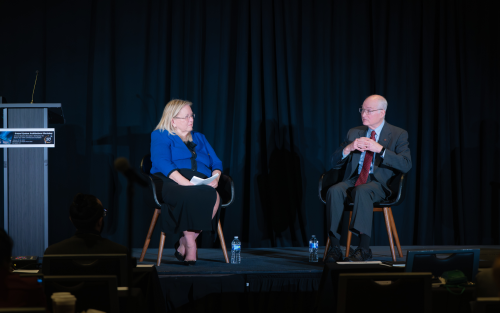
The second and fourth days of the workshop included moderated fireside chats, with the third day featuring a traditional keynote speaker. All three speakers anchored the 30th anniversary event, each representing a different dimension of the rapidly evolving space ecosystem.
Dr. Paul Nielsen, CEO of the Carnegie Mellon University Software Engineering Institute and Major General, USAF (ret.), opened the workshop with a strategic perspective on innovation, national security, and the future role of advanced technology in maintaining space domain leadership in a fireside chat moderated by Aerospace’s Marilee Wheaton. With decades of experience in defense research and advanced systems development, Nielsen’s chat reflected on lessons learned across major technology transitions and the importance of architectural thinking in solving complex national challenges.
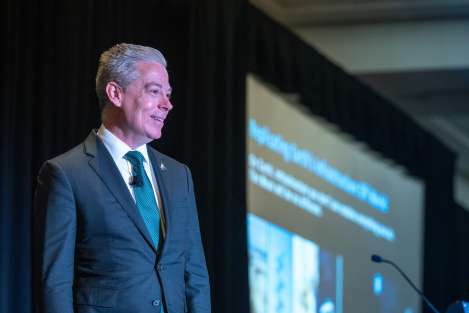
Representing the civil space community, Kevin Coggins, Deputy Associate Administrator for NASA's Space Communications and Navigation Program, provided insight into the evolving infrastructure required to support the next generation of exploration missions. As NASA prepares for sustained lunar operations and future deep-space exploration, ground and communication architectures must expand to support increasingly distributed and autonomous mission operations.
From the emerging commercial sector, Bridgit Mendler, CEO of Northwood, offered a forward-looking perspective on commercial innovation in space infrastructure. Her fireside chat, moderated by Aerospace’s Lori Gordon, explored how new commercial architectures are transforming satellite communications and ground networks, enabling more scalable and responsive space services.
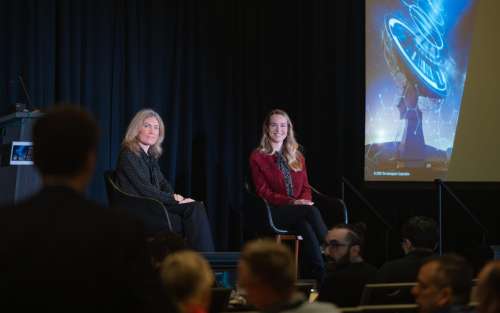
Together, these speakers illustrated the intersection of national security, civil exploration, and commercial innovation that now defines the modern space enterprise.
Since its inception, GSAW has distinguished itself by emphasizing deep technical dialogue and architectural thinking rather than traditional conference presentations. Participants engage directly with colleagues across the ground system community on emerging ideas, system design challenges, and operational lessons learned from real-world programs.
Over the past three decades, the workshop has chronicled the transformation of ground systems from mission-specific infrastructures to flexible, software-defined, and cloud-enabled architectures capable of supporting complex constellations and multi-domain operations.
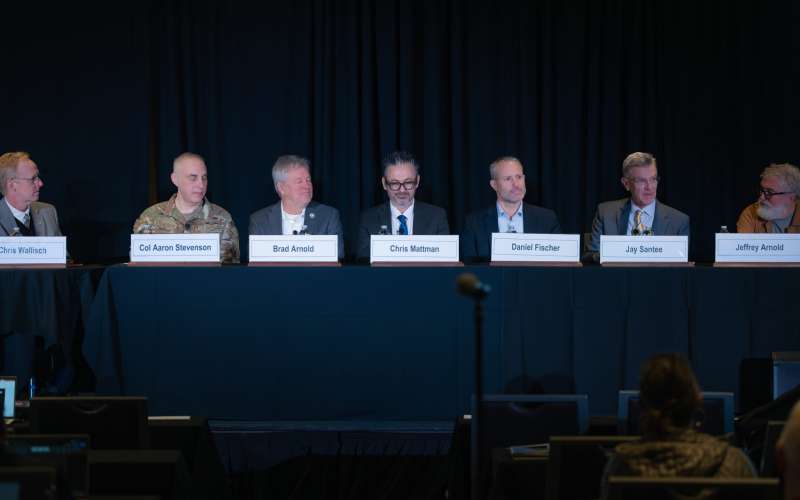
Key themes explored during this year’s sessions included:
- Autonomous mission operations
- Cloud-native ground architectures
- Artificial intelligence for mission management
- Cyber-resilient ground systems
- Interoperable architectures for proliferated constellations
These topics reflect the increasingly dynamic environment in which modern space systems must operate.
Addressing National Security Challenges
Consistent with GSAW’s long-standing tradition of addressing critical operational topics, the workshop also included a classified technical session. This session allowed cleared participants from government and industry to discuss sensitive architectural challenges and emerging threats affecting space systems.
Looking Toward the Next 30 Years
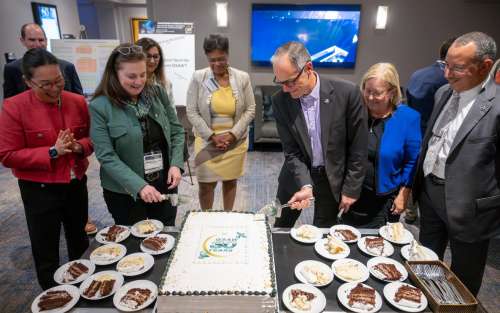
As the Ground System Architectures Workshop celebrates its 30th year, it stands as a testament to the enduring importance of systems architecture as a discipline. The space domain is entering a period of unprecedented growth, driven by commercial innovation, national security demands, and ambitious exploration goals.
Ground systems—once viewed primarily as mission support infrastructure—are now recognized as strategic enablers of space capability.
Thirty years after its founding, GSAW continues to bring together the ideas, expertise, and collaborative spirit needed to define the future of space systems.