

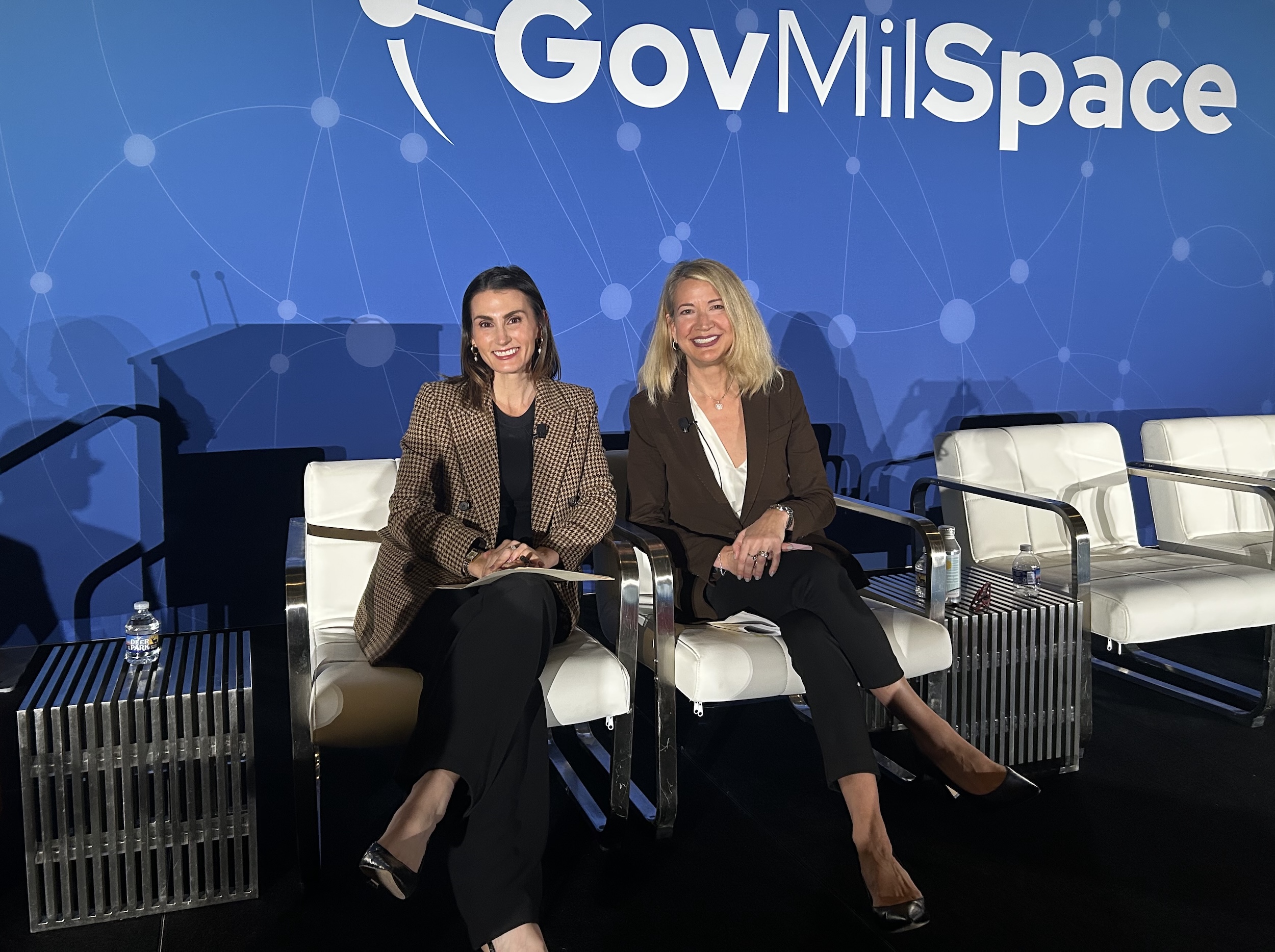
Aerospace CTO and Vice President Dr. Debra Emmons recently sat down for a fireside chat at the Satellite and GovMilSpace conference in Washington, D.C. to talk about the rapidly evolving space environment with moderator Kelli Kedis Ogborn.
The chat began with acknowledging the tension inherent to the fast-moving tech and private space industry meeting the traditionally longer horizons in government and defense.
"Space right now is absolutely vital. Whether it's for communications or navigations or intelligence, it's more critical — and more vulnerable — than ever before," said Emmons. "We have thousands of satellites now; with all these changes happening, it presents opportunities, and it presents challenges."
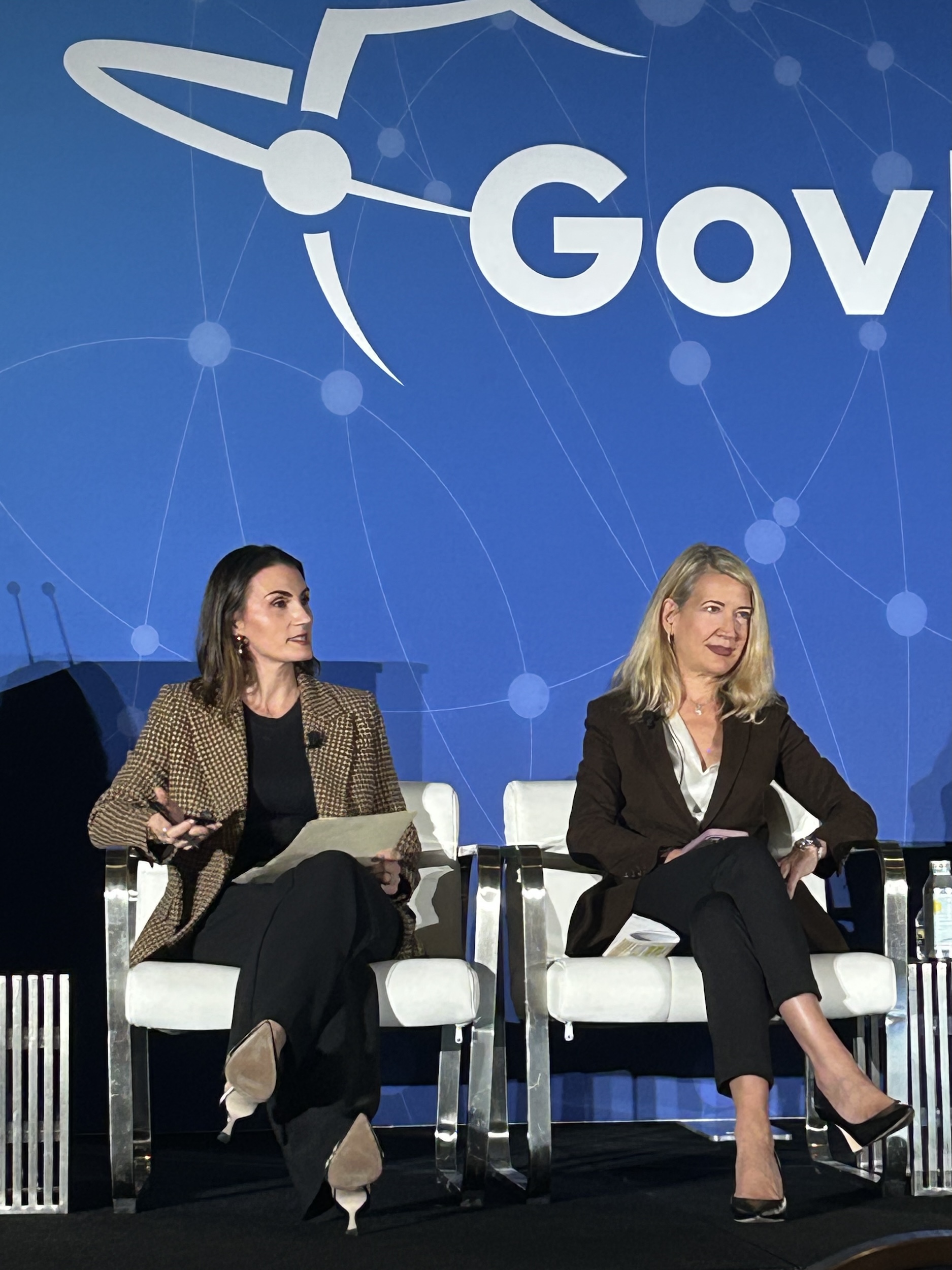
"Navigating that complexity is a really important piece that we play. We've always worked at applying that deep technical expertise, but I think more and more, as we see commercial capabilities coming online, we're able to test them out and integrate them. So we're acting more as a technical bridge."
Kedis Ogborne pointed out that the two sides can be complementary, but that the newcomers won't have the depth of experience in the difficulties of operating in space.
"Space is really hard," she said. "How do you look at that landscape, in terms of understanding that we don't want to impede new commercial players, but they need to understand the landscape that they're coming into?"
"There's probably a bit of a polarity here, right? The innovation is absolutely great, we want to embrace that: it can help you think about how to design differently or build differently, and it can enable that faster. And we should be asking ourselves those questions," Emmons replied.
"But at the end of the day, you can't change the fundamental physics. You have extreme radiation environments, you have thermal cycling. You have to do orbital mechanics, and you really do want to have things that last. Not everything is multi-year, but a lot of things are, and you know, on orbit, you can't go and make fixes there," she continued.
"We've been thinking about this in what we've been calling our 'hard problem' framework, it's beyond just engineering questions, it's systems of hard problems. It's looking at the architectures, thinking about how to make the systems more resilient."
Kedis Ogborn concluded: "At the end of the day, you have the mission at heart, and you can give that objective viewpoint, right? I think we need to create a framework that's full but iterative, because there are going to be problems that we solve along the way."