

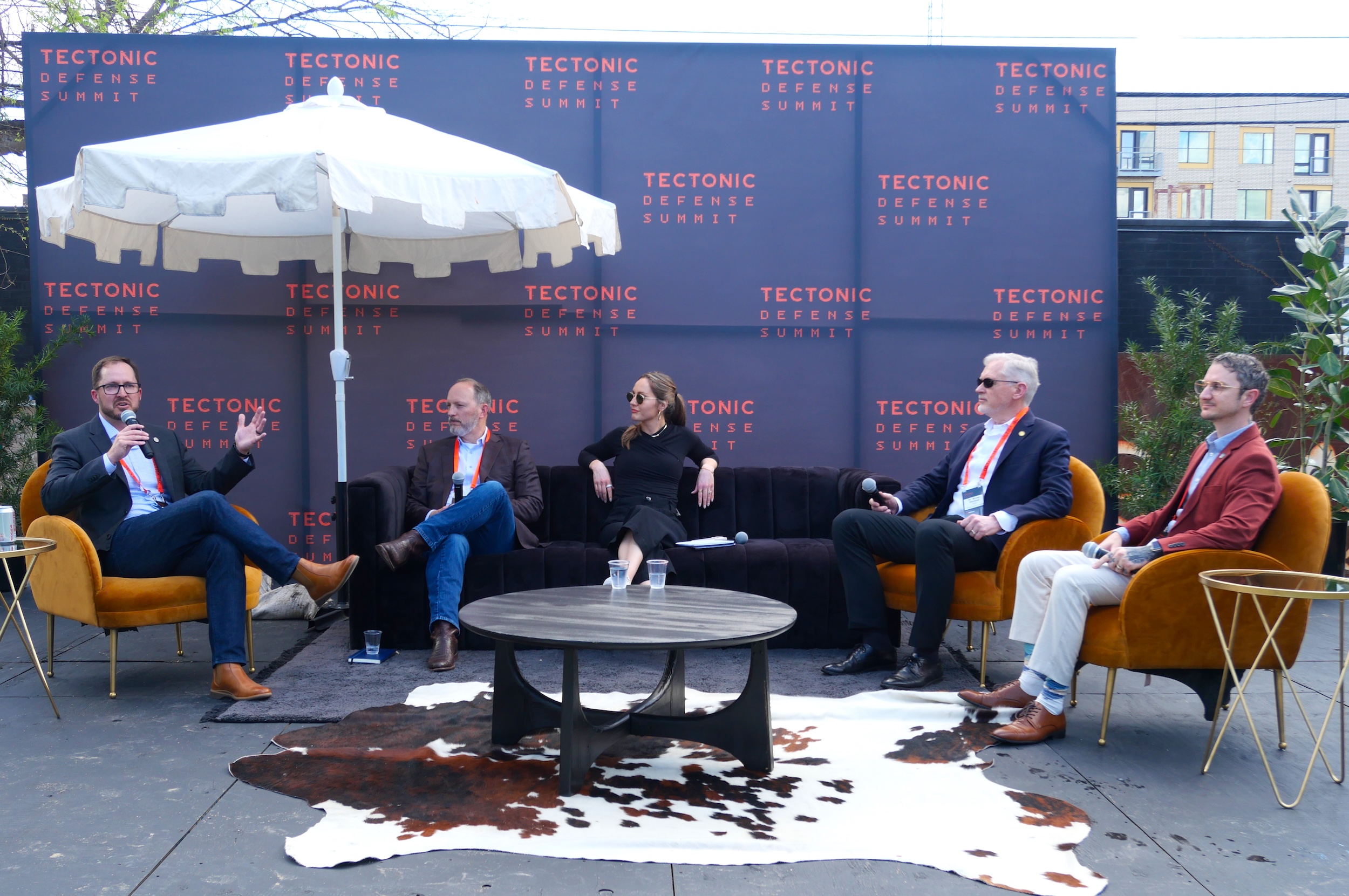
Space is increasingly a contested environment, and there is an urgent need to move and build faster. In a panel at the Tectonic Defense Summit in Austin, Aerospace Deputy CTO Brian Cameron spoke with government and industry leaders about how the space industrial base can best be supported and accelerated.
"I think it's an understatement to say it's an exciting time in the space industry," Cameron began. And a particularly collaborative one, as the panel's makeup testifies: Trey Pappas, Chief Revenue Officer of CesiumAstro; Alyssa Goessler, VP at AE Industrial Partners; Victor Vigliotti, Director of the U.S. Space Force Front Door; and Dr. Bryan Dorland, Principal Director for Space Technology, Office of the Assistant Secretary of War for Critical Technologies.
The panel began by talking about the government's changing approach to commercial space, in particular its efforts to lower barriers to entry for companies and services that aren't yet in the system.
"We understand that it can be very difficult, especially if you're startups, to engage with the department," said Dr. Dorland, But we are working ferociously to try to get with small companies and investors, try to align them, bring them into our ecosystem so they can help us — so we're leveraging the energy and the outside funding that commercial entities bring to the fight."
Vigliotti seconded this, adding that he's seeing a considerable increase in commercial capabilities, particularly in digital services and AI/ML.
"The demand signal is there on both sides — the commercial perspective, the government perspective — and we can't wait for those traditional acquisition timelines, you know, 10-15 year timelines, to get after such a dynamic challenge when we have commercially available off-the-shelf capabilities today," he said.
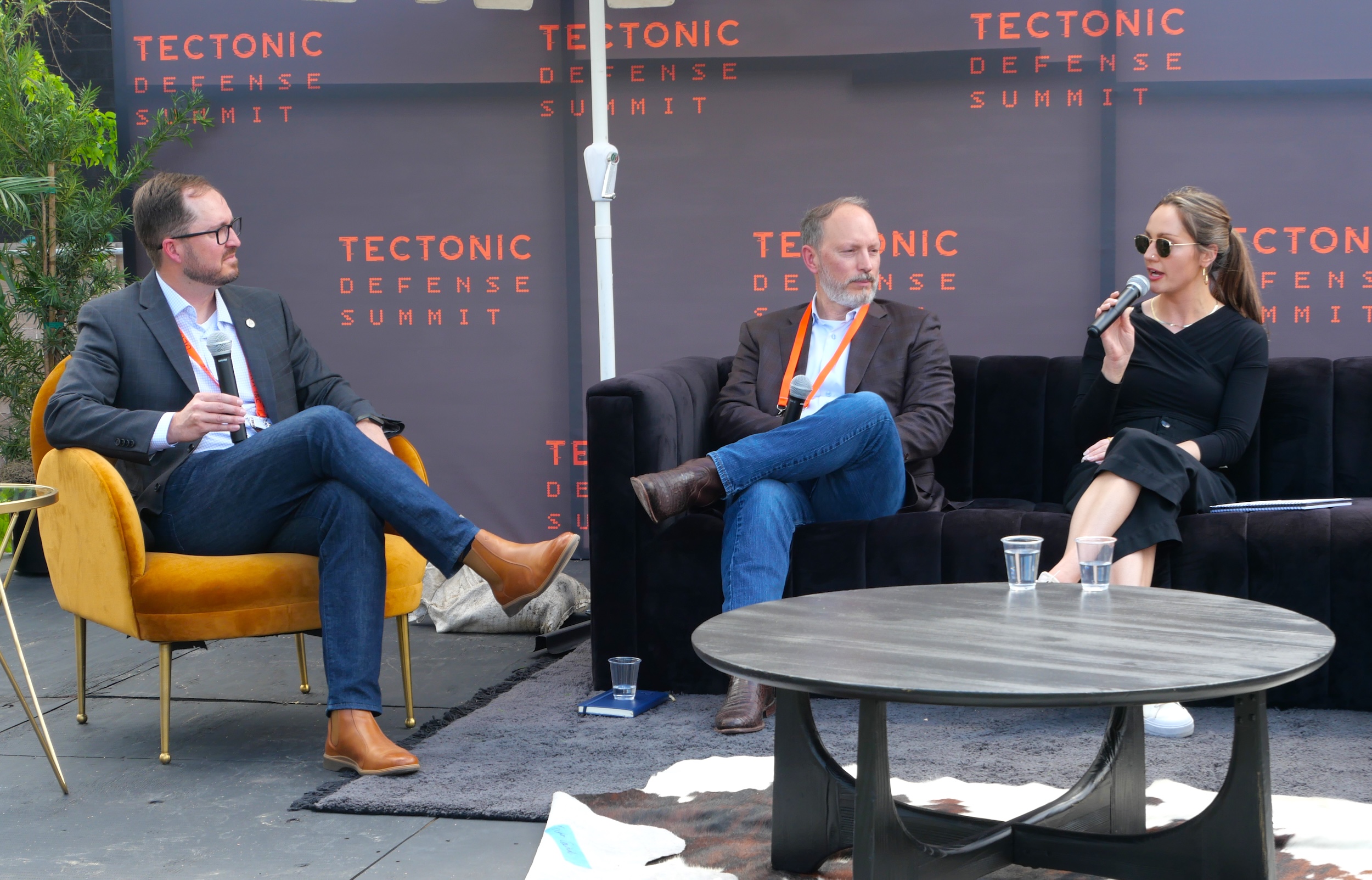
Goessler suggested that the evolving arrangement was moving towards something beneficial for all parties.
"I think it's a really important reset on both sides; it reminds the industry and investors that the real work is showing up at the table and asking what problem needs to be solved," she said. "And what's really exciting about this evolution is it frees up entrepreneurs to do what they do best, which is innovate. Taking more of a problem or mission focus rather than specific requirements keeps them from being bogged down by the technology we were leveraging yesterday and instead design for the fight tomorrow."
One such innovator is Pappas, whose startup CesiumAstro recently raised a $470 million funding round.
"Look, space is still hard. We take it for granted now that companies are launching thousands of satellites, access is easier, but it's still a challenging environment. So you need multiple lines of effort, and if you're going to build these, you know, five nines capabilities, it's going to be expensive and slow, and you have to be able to operate at speed," Pappas explained. "Small companies give this nation speed, they give innovation. But many startups fail because they can't get at enough customers — they need that demand signal."
Dorland and Vigliotti obliged, imploring commercial innovators to maintain active, visible relationships with the Space Force Front Door and to provide feedback on how to solve the service’s hard problems.
“We want to just tell the commercial folks, ‘Here's our problem. Can you help us solve it?' We're not going to tell them what widget to build,” Dorland said, “and it could be a dual use issue. It could be something that they can take and modify and build to scale. All those things are open to us."
“We hear you, and we want you. We want to move forward with these capabilities,” Vigliotti added. “And we are open to changing some of these processes to get after these things a little more quickly."