

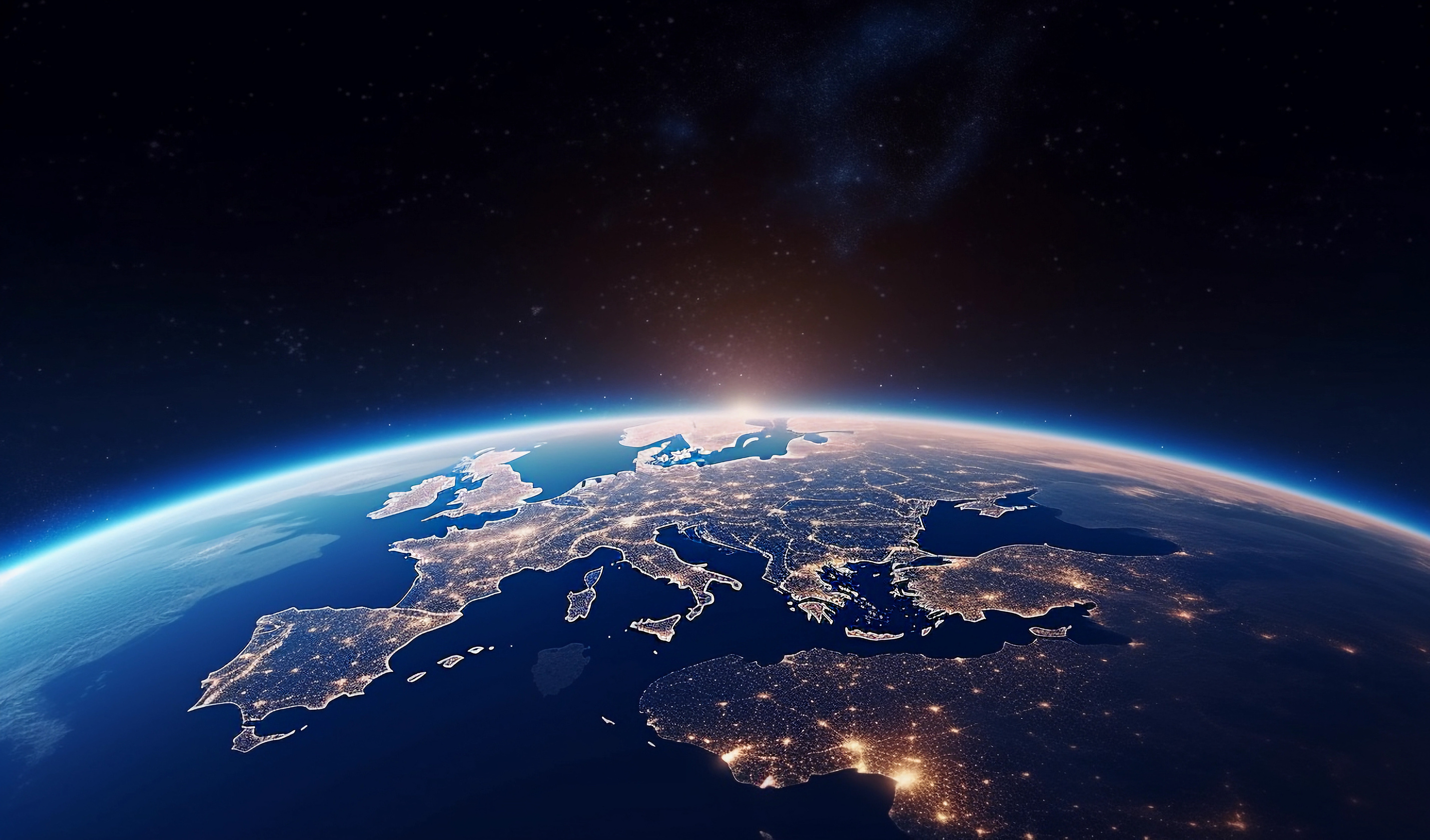
The next phase of the European space sector may see its "center of gravity" shift from the European Space Agency (ESA) toward the European Union (EU), as well as toward security and defense, according to an analysis by Aerospace's Mick Gleason.
Gleason, at the Center for Space Policy and Strategy, has published a new paper entitled "A Geopolitical Awakening: The European Union and Space." After explaining how the EU and ESA are distinct from one another, he argues that the proposed 7-year budget for 2028-2035 prioritizes European autonomy in space defense, spurred by Russia's invasion of Ukraine. Massive programs like Galileo and Copernicus will continue to be supported and modernized, but a greater emphasis will be placed on the resilience and defense of EU-owned and operated critical space infrastructure.
As the paper puts it:
The strategy acknowledges the EU requires the ability to protect its space assets from counterspace threats and identifies several actions to strengthen EU space system resilience and protection. Likewise, it proposes measures to maximize the use of space for the EU’s security and defense.
"I'm predicting, based on my analysis, that the EU could be providing over 50% of the European Space Agency's budget," Gleason said in an interview with SpaceNews.
Such a surge in spending would re-order the European space sector, necessitating re-evaluation by nations and industries who work with and within the orbits (literal and figurative) of the EU and ESA.
"The level of investment that the EU is on the cusp of approving is really historic, and it's going to change the game in Europe significantly," he told Aerospace America.
Gleason details some of the ways these two organizations, and those of member and contributing states, may change the way the space sector conducts itself over the next decade. Understanding these changing dynamics and structures, he suggests, will significantly aid decision-makers aiming to engage with Europe, by anticipating barriers to and opportunities for collaboration.