

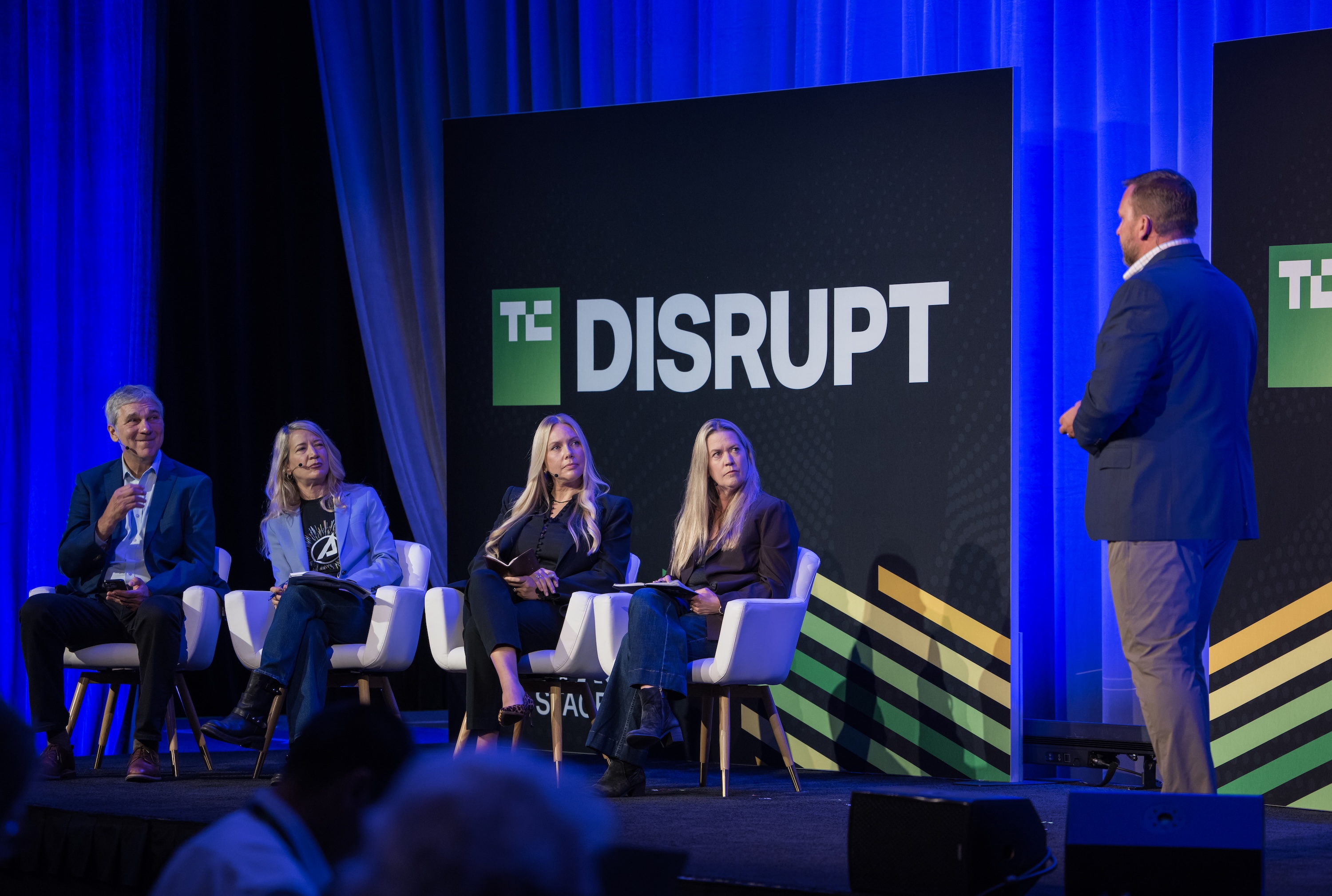
Aerospace recently led the Space Stage at TechCrunch Disrupt in San Francisco, convening leaders in the space domain, investment, and government to discuss the bright future of the industry.
The day began with a startup pitch-off, featuring four growing companies that demonstrate the value of bottom-up innovation in space. We'll have more on them later as examples of early-stage companies taking on the hardest problems in space, but here they are in brief:
- Magma Space: Redesigning bearings as a near-frictionless mechanical interface that allows high-precision operations
- Little Place Labs: Putting intelligence and analysis on edge devices in orbit for faster, more accurate data and decision-making
- Orbital Robotics: Autonomous robot arms and other devices that ease and empower orbital assets
- Sedaro: High quality physical and electronic simulations of thousands of satellites, on demand
(Scout Space, which specializes in top-down space domain awareness, was also slated to present but couldn't make it.)
Aerospace CTO Dr Debra Emmons, GXO founder and CEO Mandy Vaughn, JPL CTO Dr. Tom Cwik, and founding partner of Seven Seven Six Katelin Holloway evaluated the pitches and questioned the startups on their business potential, defensibility, and other factors. You can watch the full pitch-off here.
Next was a fireside chat with AetherFlux co-founder Baiju Bhatt, and then a panel on the complex task of investing in space startups, featuring Morgan Beller from NFX, Stellar Ventures' Celeste Ford, and Chris Morales of Point72 Ventures.
"The application layer is commonly referred to as a broader space economy, people doing really cool things, space stations, in-space manufacturing and everything else," said Morales. "But we think the infrastructure layer really needs to continue to be invested in. The reality is until you have reliable supply chains, the ability to manufacture satellites at scale, service them, to move to, through, and back from space, it's a long ways to go until you can really have that thriving space economy, that application layer."
After a fireside chat with Varda Space founder and CEO Will Bruey, Emmons took the stage again with two space and software startup founders: Violet Labs' Dr Lucy Hoag and Ursa Space Systems' Adam Maher. The panel discussed the importance, as they see it, of pursuing a real problem rather than building advanced tech without a clear application.
"Tackling things from a problem-centric perspective is super important for the space industry," explained Hoag, "Because we have a lot of folks that have spent many years being educated to do their jobs, and are pretty particular about making sure things are provably right and not black boxes. It's a tall order for an aerospace engineer to take on a new tool or process or system that isn't ameliorating a problem or helping them do things faster — it can't just be a shiny new thing."
The last panel of the day was a barn burner, with four highly influential leaders in the new space economy: Stoke Space COO Kelly Hennig, Northwood Space co-founder and CEO Bridgit Mendler, Vast CEO Max Haot, and True Anomaly CEO and co-founder Even Rogers. Check it out here.
To end the morning, Emmons and Aerospace VP of Launch, Missiles, and Mobility Randy Kendall announced that the judges had selected Little Place Labs as the best pitch. We'll have more on their work and the other companies in the showcase soon.
The event epitomized the commercial-first approach being pursued across the space industry, while also emphasizing the need for a trusted technical partner to help situate and validate a new generation of companies.
"More and more of the government customers that we do work for, across the intel and defense and the civil side, are saying, how do we take advantage of this commercial capability? How do we integrate that commercial capability?" said Emmons in her panel.
She cited collaborations like TRL Bootcamp with SpaceWERX, or Aerospace's own Spoon Bender wargame and AI testing platform, as examples of how the new commercial-first mentality is actively being pursued.