

Space solutions need to move fast. As threats evolve and commercial capabilities expand at unprecedented rates, the ability to rapidly integrate and deliver space capabilities on tactically responsive timelines is essential.
Aerospace’s support to the U.S. Space Force’s Space Safari team demonstrates the kind of work Aerospace is uniquely positioned to do by drawing on 65-plus years of corporate memory and technical depth across every aspect of space systems. That institutional knowledge, combined with world-class laboratory facilities and embedded relationships with both government customers and commercial partners, creates what Aerospace calls "The Convergence Effect"—attributes that cannot be replicated elsewhere and are essential to accelerating capability development in ways that benefit the entire space industrial base.

Space Safari operates under a fundamentally different priority order than traditional programs. Where conventional acquisitions prioritize performance, cost, then schedule, Space Safari flips that: schedule first, cost second, performance third.
The VICTUS NOX mission demonstrated what’s possible with tactically responsive space: activating in less than 60 hours, launching in under 24 hours and commissioning in less than 48 hours to rendezvous with another spacecraft in low Earth orbit. These timelines represent the kind of rapid capability delivery that Space Safari missions aim to provide. To support these rapid-fire missions, Aerospace draws on deep technical expertise across multiple disciplines, serving as systems integrator for several programs. No two missions are alike, yet the approach demonstrates what’s possible when specialized knowledge combines with streamlined processes.
Speed alone isn't the story. It's speed at a fraction of traditional costs, enabled by Aerospace's unique role.
"Because of Aerospace's expertise, we can accomplish a lot very efficiently," said Patricia Lew, senior project lead within Aerospace's Space Safari efforts. "What would normally require significantly larger teams and budgets in traditional programs, we're able to support with a lean, focused approach."
Teaching Commercial Contractors the DOW Way
As the nation’s trusted partner for space, Aerospace is uniquely able to bridge the gap between commercial space innovation and national security mission requirements—leveraging decades of experience and technical depth to get stakeholders on the same page.
"We're teaching commercial contractors how to do DOW-like missions," Lew said. "A lot of contractors don't know about DOW procedures for spectrum filing, orbital debris processes, space flight worthiness or security requirements. They think they can design their system and then bulletproof it for security afterward. That's not how you meet security requirements—you have to design with security in mind from the start."
This understanding extends across the full mission lifecycle. Aerospace works closely with commercial partners, going through details that can make or break a mission.
Handle: The Technology That Enables Plug-and-Play
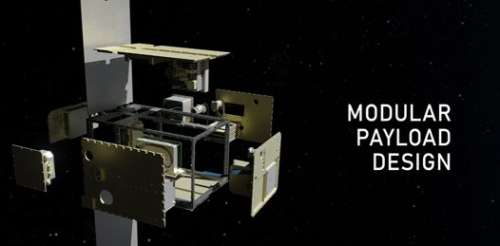
One significant enabler for tactically responsive space timelines is Handle 2.0, building on Aerospace’s earlier Handle work. The standardized interface technology allows plug-and-play integration.
“Interfaces are how we in the Space Force can harness the growing commercial space market… Handle is crucial to enable the implementation of smart systems engineering practices that allow for faster, easier integration of complex subsystems,” said U.S. Space Force Col. Bryon McClain, in a December 2025 press release.
A commercial vendor is already licensing the technology for a payload flying on VICTUS SALO 2, planned for no earlier than 2028.
A Pathfinder for Acquisition Transformation
Aerospace’s approach to Space Safari contracts demonstrates what’s possible when deep technical expertise also informs streamlined acquisition. Traditionally, government and military contracts can run hundreds of pages with dozens of Contract Data Requirements Lists. Space Safari contracts are far leaner.
"Our technical requirements documents aren't 50-page documents," said Steven Schiff, systems director for Special Programs, Tactically Responsive Space, who, along with Lew, supports Space Safari missions. "They're mostly capabilities-based to tie the system together. Our contracts are lean and mean, and they go fast."
This approach doesn't mean cutting corners—it relies on knowing what’s essential and what can be skipped.
Risk Assessment at Speed
Going fast means accepting some level of risk. Aerospace's role includes helping the government understand exactly what risks they're accepting—or avoiding—with each decision.
"We're able to evaluate risk, and in order to go fast, you have to accept a level of risk," Schiff noted.
The Bottom Line
Space Safari operates with agility, adapting to evolving threats, emerging technologies and rapidly changing commercial capabilities. The program includes multiple missions beyond VICTUS NOX—VICTUS HAZE, VICTUS SURGO AND VICTUS SALO, to name a few—each demonstrating different aspects of tactically responsive space operations.
The urgency is clear. Put simply: The U.S. needs to fly its leading-edge technology while it's still leading edge.
As the contested space domain continues to evolve, Aerospace’s ability to rapidly integrate, assess risk objectively and bridge commercial innovation with national security needs is key to enabling the Space Force to respond at the speed of relevance.